Product Detail
AR, Beamsplitter & Polarizer
Related Products
- UV spectrophotometer - UV semi transparent and semi reflective lens
- Cpl polarizing lens
- AR double-sided anti reflective lens
- 50:50 Spectral Lens
Custom Order
 15112422758
Call / Send specs for a quote
Custom to Drawing or Sample
Send us wavelength, size and coating specs — or a drawing or sample — and we will evaluate and issue a proposal. Prototype samples in 3-7 working days.
Scan to chat with us
Technical Specifications
| Model | 1003 |
|---|
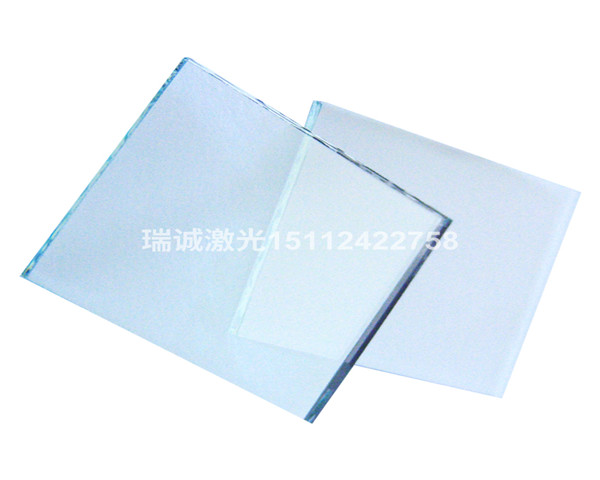
Anti reflective filters refer to AR films, AR sheets, anti reflective films, and AR filters; Anti reflective film is a type of film used in optical components to reduce the loss of light energy due to the reflection effect on the surface of the component. In order to minimize the reflection loss on the surface of the component, a transparent dielectric film is often coated on the surface of the optical component. This type of film is called an anti reflective film
The principle of anti reflective lenses:
Consider light as a type of wave because light waves, like mechanical waves, also have the property of interference. Apply a layer of anti reflective film in front of the lens (usually; Calcium fluoride; If the thickness of the film is equal to one fourth of the wavelength of red light (note: red light is referred to here) in the anti reflective film, then the red light reflected back on both sides of this film will interfere with each other (the optical path difference is an odd multiple of half the wavelength) and cancel each other out. You will not see any reflection in front of the lens because according to energy conservation, this beam of red light has already passed through the lens The function of an anti reflective film is to reduce the intensity of reflected light, thereby increasing the intensity of transmitted light and making the optical system image clearer.
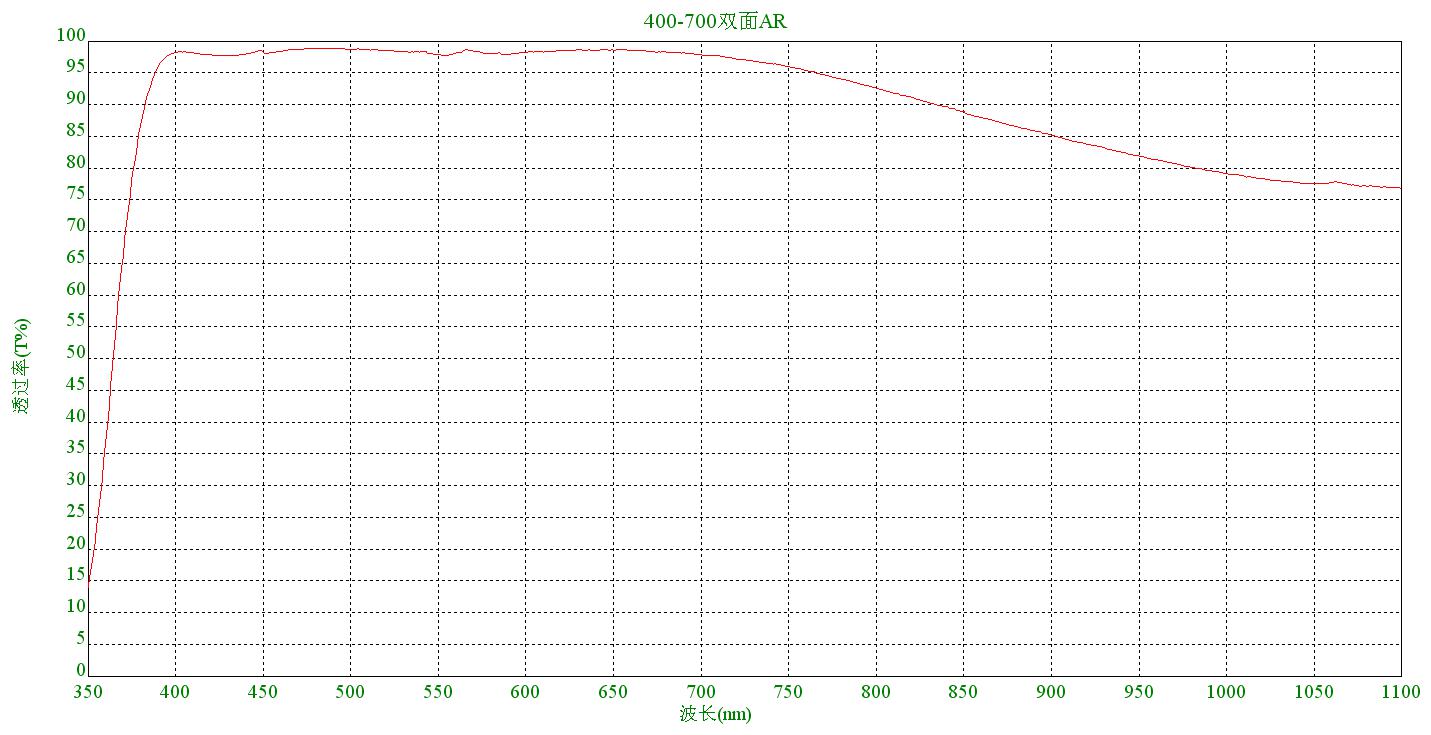
Optical band: 400nm-700nm (visible light)
Transmittance rate: 99%
Glass material: k9, float glass, quartz plastic lenses, acrylic, pc,
Product appearance:; Irregular shape, biplane, lens
Our company provides single-sided anti reflective glass and double-sided anti reflective glass. The common coating methods are single-sided AR and double-sided AR; the anti reflective bands include visible light band anti reflective, infrared light band anti reflective, and ultraviolet light band anti reflective.
There are two types of single point enhancement or bandwidth enhancement (bbar):
1) Typical wavelength for single point anti reflection: AR@355nm , AR@475nm , AR@532nm , AR@650nm , AR@808nm , AR@850nm , AR@940nm , AR@1064nm , AR@1310nm , AR@1550nm.
2) Typical wavelengths for broadband anti reflection: AR@300nm ~400nmr< 0.5%, AR@420nm ~680nmr< 1.0%, AR@400nm ~1100nmr< 2%.
Application fields:
Used for coaxial light sources in machine vision, double-sided lensing, protective screens for display devices such as smartphones, LCD TVs, tablets, laptops, desktop computer displays, high-end instrument panels, touch screens, photo frames, etc., which improve transmission and reduce reflectivity of electronic products.
Spectral curve diagram:
The principle of anti reflective lenses:
Consider light as a type of wave because light waves, like mechanical waves, also have the property of interference. Apply a layer of anti reflective film in front of the lens (usually; Calcium fluoride; If the thickness of the film is equal to one fourth of the wavelength of red light (note: red light is referred to here) in the anti reflective film, then the red light reflected back on both sides of this film will interfere with each other (the optical path difference is an odd multiple of half the wavelength) and cancel each other out. You will not see any reflection in front of the lens because according to energy conservation, this beam of red light has already passed through the lens The function of an anti reflective film is to reduce the intensity of reflected light, thereby increasing the intensity of transmitted light and making the optical system image clearer.
Optical band: 400nm-700nm (visible light)
Transmittance rate: 99%
Glass material: k9, float glass, quartz plastic lenses, acrylic, pc,
Product appearance:; Irregular shape, biplane, lens
Our company provides single-sided anti reflective glass and double-sided anti reflective glass. The common coating methods are single-sided AR and double-sided AR; the anti reflective bands include visible light band anti reflective, infrared light band anti reflective, and ultraviolet light band anti reflective.
There are two types of single point enhancement or bandwidth enhancement (bbar):
1) Typical wavelength for single point anti reflection: AR@355nm , AR@475nm , AR@532nm , AR@650nm , AR@808nm , AR@850nm , AR@940nm , AR@1064nm , AR@1310nm , AR@1550nm.
2) Typical wavelengths for broadband anti reflection: AR@300nm ~400nmr< 0.5%, AR@420nm ~680nmr< 1.0%, AR@400nm ~1100nmr< 2%.
Application fields:
Used for coaxial light sources in machine vision, double-sided lensing, protective screens for display devices such as smartphones, LCD TVs, tablets, laptops, desktop computer displays, high-end instrument panels, touch screens, photo frames, etc., which improve transmission and reduce reflectivity of electronic products.
Spectral curve diagram: