Fundamentals of AI Intelligent Vision: Introduction to CCD and CMOS Sensors
CCD and CMOS sensors are currently the most commonly used digital image sensors. Both CCD and CMOS use photosensitive elements as the basic means of image acquisition. The core of CCD and CMOS photosensitive components is a photodiode, which can generate output current and current intensity after receiving light, corresponding to the intensity of light.
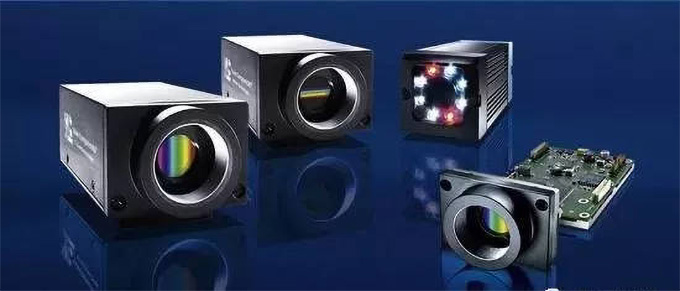
CCD
A charge coupled device (ChargeCoupLEDDevICe) is made of a highly sensitive semiconductor material that converts light into an electric charge, which is then converted into a digital signal through an analog conversion chip. After compression, the digital signal is stored in the camera's flash memory or built-in hard drive card, making it easy to transfer data to the computer and modify the image through computer processing as needed and imagined. When the surface of the CCD is illuminated by light, each photosensitive unit reflects charges onto the component, and the signals generated by all photosensitive units are added together to form a complete image.
CMOS
Complementary metal oxide semiconductor, also known as complementary metal oxide semiconductor, is a type of semiconductor that can be used as a CCD in digital cameras to record changes in light. The manufacturing technology of CMOS is not much different from that of general computer chips. It mainly utilizes semiconductors made of silicon and germanium to coexist with N and P level semiconductors on CMOS. The currents generated by these two complementary effects can be recorded and interpreted as images by the processing chip.
The advantages of both:
The advantage of CCD is good imaging quality, but due to the complexity of the manufacturing process, only a few manufacturers can master it, resulting in high manufacturing costs, especially for large CCDs. At the same resolution, CMOS is cheaper than CCD, but CMOS devices produce lower image quality than CCD. So far, the vast majority of consumers and high-end digital cameras in the market use CCD as sensors; CMOS sensors are used as low-end products in some cameras.
One of the advantages of CMOS image sensors is that their power consumption is lower than that of CCD. In order to provide excellent image quality, CCD incurs high power consumption costs. In order to smooth charge transfer and reduce noise, it is necessary to improve the transfer effect through high voltage difference. However, CMOS image sensors convert the charge of each pixel into voltage, amplify it before reading, and drive it with a 3.3V power supply, which consumes less power than CCD. Another advantage of CMOS image sensors is their high integration with peripheral circuits, which allows for the integration of ADCs and signal processors, greatly reducing their size.
noise
Due to the need for an amplifier for each CMOS photodiode, measuring in millions of pixels would require over one million amplifiers. Due to the fact that amplifiers are analog circuits, it is difficult to maintain consistency in the results of each amplifier. Therefore, compared to CCD sensors with only one amplifier at the chip edge, CMOS is a good choice. The noise of the sensor will greatly increase, affecting the image quality.
power consumption
The image acquisition method of CMOS sensors is active, and the charge generated by the photodiode will be directly amplified and output by the next transistor, while CCD sensors must apply voltage to move the charge in each pixel to the transmission channel. The additional voltage generally requires 12-18V, so CCD must have more precise power line design and withstand voltage strength. The high driving voltage significantly increases the power consumption of CCD compared to CMOS.
cost
Due to the use of the most commonly used CMOS process in general semiconductor circuits, CMOS sensors can easily integrate peripheral circuits such as AGC, CDS, timing generators, or DSP into the sensor chip, thereby saving the cost of peripheral chips; And CCD transmits data through charge transfer. r, As long as it does not include a single pixel. The yield of CCD sensors is more difficult to control than that of CMOS sensors. Even experienced manufacturers find it difficult to break through the 50% level within six months after the product is launched. Therefore, the manufacturing cost of CCD sensors will be higher than that of CMOS sensors.
CCD and CMOS sensors are superior to CMOS sensors in terms of image quality, and CMOS sensors have the characteristics of low cost, low power consumption, and high integration. However, with the development of CCD and CMOS sensing technologies, the differences between the two will gradually decrease. The new generation of CCD sensors has shortcomings in improving resolution and sensitivity while increasing power consumption. There is reason to believe that the continuous improvement of CCD and CMOS sensors will bring a better visual world.