Product Detail
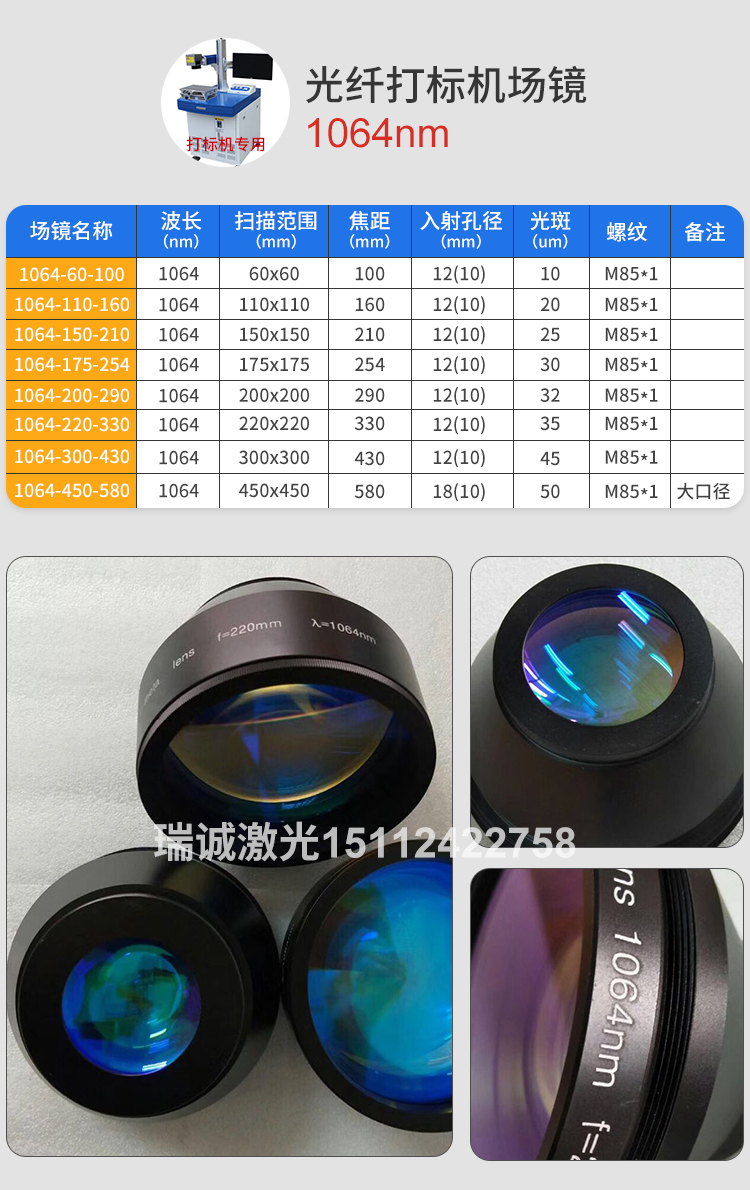
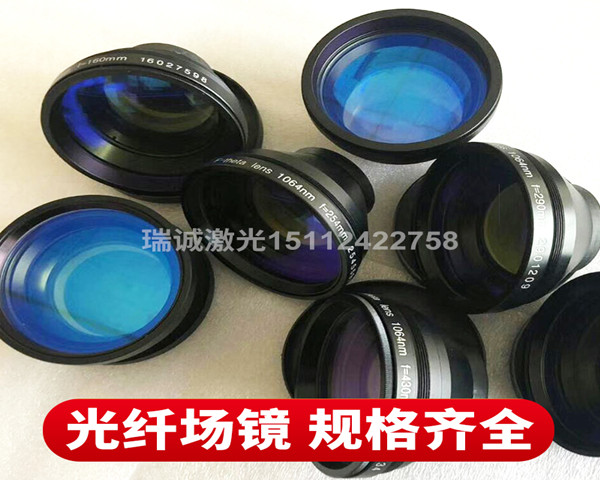
Laser Marking Galvo Lens
Related Products
- 532nm green light marking airport mirror
- 1064nm scanning range 150 * 150F=210mm fiber field mirror
- Fiber laser marking field mirror 175 * 175mm F=254nm
Custom Order
 15112422758
Call / Send specs for a quote
15112422758
Call / Send specs for a quote
Custom to Drawing or Sample
Send us wavelength, size and coating specs — or a drawing or sample — and we will evaluate and issue a proposal. Prototype samples in 3-7 working days.
Scan to chat with us
Technical Specifications
| Model | 009 |
|---|
Basic definition of field lens:
A lens that works near the focal plane of the objective lens and can effectively reduce the size of the detector is called a field lens.
More precisely, the field lens should operate on the image plane of the objective lens. On the one hand, the object plane of the field mirror coincides with the main plane, and its magnification is 1 according to the characteristics of the main plane, so it does not contribute to the magnification of the system; On the other hand, the field lens should project the aperture surface of the objective lens onto the entrance pupil of the eyepiece. For a single lens, the aperture surface is also the exit pupil, which ensures that the exit light of the objective lens can pass through the eyepiece to the maximum extent possible. If used in a scanning system, the detector replaces the entrance pupil of the eyepiece.
Basic classification of field mirrors:
Classified by frequency band: 1064nm field mirror (also known as YAG field mirror), 10.6-micron field mirror (also known as CO2 field mirror), 532nm field mirror (also known as green field mirror), 355nm field mirror (also known as ultraviolet field mirror).
Classified by design concept: f-theta lens and telecentric lens. Telecentric lens has a high cost and is mainly suitable for f-theta lens in industrial systems.