Product Detail
Laser Marking Galvo Lens
- 1064nm Fiber Marking Machine Special Field Mirror 110 * 110F160mm
- 1064nm scanning range 150 * 150F=210mm fiber field mirror
- Fiber laser marking field mirror 175 * 175mm F=254nm
Custom to Drawing or Sample
Send us wavelength, size and coating specs — or a drawing or sample — and we will evaluate and issue a proposal. Prototype samples in 3-7 working days.

Scan to chat with us
Technical Specifications
Specifications for this model are coming soon — call us for measured data.
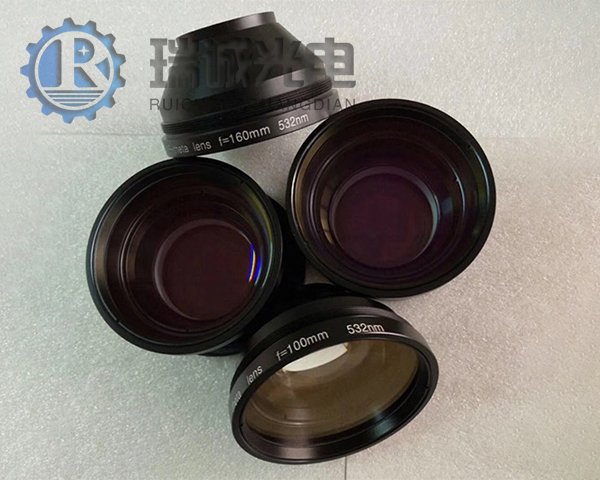
Special for laser engraving machine -532nm field mirror
Ruicheng Optoelectronics Co., Ltd. provides: 532nm field lens, green field lens, laser engraved field lens, 532nm laser scanning lens, and 532nm flat field focusing lens.
532 Green Laser:
Green laser is suitable for marking materials sensitive to thermal effects, as the wavelength of 532 determines that green laser is a relative“ Cold laser;. The reason why it is relative refers to the fact that compared to CO2 laser marking machines, semiconductor laser marking machines, and fiber laser marking machines, the thermal radiation effect of green laser is smaller, but compared to 355nm ultraviolet laser, its thermal effect is larger. The most typical application of the 532 green laser marking machine is to carve and engrave on the surface and inside of crystals.
Crystal and glass engraving patterns are made using computer-controlled laser engraving machines. In fact, most of the handicrafts commonly seen are not real crystals, but artificial crystals. “ Laser” It is about artificial crystals (also known as "artificial crystals"); Crystal Glass; )Conduct“ Internal carving” The most useful tool. Using laser engraving technology to create flat or three-dimensional patterns; Carving” Inside the crystal glass.
The principle of laser engraving is the interference phenomenon of light. Shoot two laser beams into a transparent object (such as glass, crystal, etc.) from different angles and accurately intersect at one point. Due to the interference and cancellation of two laser beams at the intersection, their energy is converted from light energy to internal energy, releasing a large amount of heat and melting the point to form a tiny cavity. The principle of laser engraving is to accurately control two laser beams to intersect at different positions, creating a large number of tiny holes that eventually form the desired pattern.
When laser engraving, there is no need to worry about the incident laser melting the material on a straight line, because the laser maintains its light energy form when passing through transparent objects, and does not generate excess heat. Only at the interference point will it be converted into internal energy and melt the material.