Optical coated filter
The application of optical coated filters has become increasingly widespread, and we are about to enter the fully commercial 5G era. For example, holographic projection technology also relies on the important optical component of filters. From optical equipment, display equipment to the use of optical thin films in daily life, without optical thin film skills as the foundation for development, modern optoelectronic, communication or laser skills would not be able to be developed. This also highlights the primary importance of research on optical thin film skills.
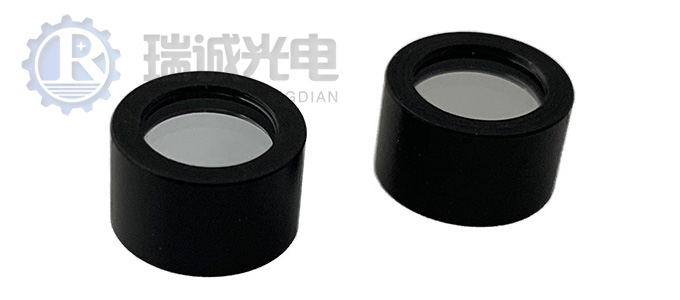
Optical coating refers to the preparation of one or several layers of dielectric or metal thin films or a combination of these two thin films on optical components or independent substrates to alter the transmission characteristics of light waves, including transmission, reflection, absorption, scattering, transmission, reflection, absorption, scattering, etc. Generally speaking, the preparation methods of optical thin films can be divided into two categories: chemical and physical. The so-called physical method is to avoid the appearance of liquid in all processing processes, such as vacuum evaporation in a vacuum environment, heating solid raw materials with electricity, turning them into gas through the process, attaching to the surface of the solid substrate, and completing coating processing. Usually seen in decorative gold, silver, or metal packaging films, it is made by dry coating method. But in practical applications, dry coatings have less scaling than wet coatings. Wet coatings are usually mixed with various functional components to form liquid coatings, which are coated on the substrate using different treatment methods, and then dried and cured to become commercial products.
Classification of optical thin films
Optical thin films can be divided into reflective films, anti reflective films, filters, polarizing/polarizing films, etc.
1. Reflective film
Reflective coatings are usually divided into two categories: metal reflective coatings and all dielectric reflective coatings. In addition, there is a metal dielectric reflective film connecting the two, which functions to increase the reflectivity of the optical appearance. In order to further improve the reflectivity of the metal reflective film, several layers of dielectric with a certain thickness can be added to the outside of the film to form a metal dielectric reflective film. It should be pointed out that adding a certain wavelength of reflectivity to the metal dielectric film destroys the neutral reflection characteristics of the metal film.
The all dielectric reflective film is based on multiple beam interference roots In contrast to anti reflective films, thin films with higher refractive indices on the optical surface can increase the reflectivity of the optical surface. The simplest multilayer reflection is formed by alternating evaporation of data with two high and low refractive indices, with each layer having an optical thickness of one fourth of a certain wavelength. Under these conditions, the reflected light vectors on the superimposed surface have the same oscillation direction. The amplitude of synthesis increases with the increase of layers.
2. Filter
Made of plastic or glass, and then added with special dyes. The analogy is that a red filter can only allow red light to pass through. The refractive index of glass is basically the same as that of air, so all colored light can pass through, so it is clear. However, after dyeing, the molecular structure also changes, and the refractive index changes. Some colored light processes also change. For example, when white light passes through a blue filter, it emits blue light, while green and red light are rare and mostly absorbed by the filter.
Optical coated filters are mainly classified in the following ways:
Divided by spectral wavelength: mainly divided into visible light filters, ultraviolet filters, and infrared filters;
According to spectral characteristics, it is mainly divided into bandpass, cut-off filter, spectrometer filter, neutral density filter, reflective filter, etc;
Thin film materials: soft film and hard film. The dura mater not only refers to the hardness of the thin film, but also its laser damage threshold, thus it has been widely used in laser systems. Soft film filters are mainly used in analytical and testing instruments
Bandpass type: The selected band of light passes through, while the outer band of light is cut off.
Short wave pass type (also known as low-pass): It has a shorter time for light of a selected wavelength to pass through and can effectively cut off the wavelength of light. For example, an infrared cut filter.
Long wave pass type (also known as high wave pass): selects the wavelength through which light passes, with a shorter wavelength cutoff than infrared transmission filters.
3. Anti reflective film/anti reflective film
Anti reflective coatings are based on the fluctuation and interference of light. If two light waves are superimposed with the same amplitude and wavelength, the amplitude of the light waves will increase; If two light waves have the same origin but different paths, then if they are superimposed, they cancel each other out. Anti reflective coatings are based on this principle. The surface of the lens is coated with an anti reflection coating, which interferes with the reflected light before and after coating, thereby canceling out the reflected light and achieving the effect of anti reflection. Usually, it is difficult to achieve the expected anti reflection effect using a single-layer anti reflection film. In order to achieve zero reflection at a single wavelength or achieve good anti reflection effects in a wide spectral range, double-layer, three-layer, or even multi-layer anti reflection films are usually used.
Anti reflective films have been widely used in practical applications. Lenses and solar cells are very common. By preparing anti reflective films, the power wattage of photovoltaic modules has been increased. Silicon nitride is currently used as an anti reflective thin film material for crystalline silicon photovoltaic cells. Using plasma enhanced chemical vapor deposition technology to ionize ammonia and silane, and deposit them on the surface of silicon wafers. It has a high refractive index and can achieve good anti reflection effect.
4. Polarizing film
The full name of polarizing film should be polarizing film. The main function of a polarizer is to convert unpolarized natural light into polarized light. With the changes in the characteristics of liquid crystal molecules, polarizers can control the process of light, thereby improving transmittance and viewing angle, and forming anti glare function.