Selection and application of Ruicheng photoelectric spectroscope
The optical part that separates a laser beam into emitted and reflected light using transparent optical elements is called a beam splitter, where the ratio of emitted light to reflected light is 1:1, known as a half mirror.
There are two types of spectrometers: cube and tablet
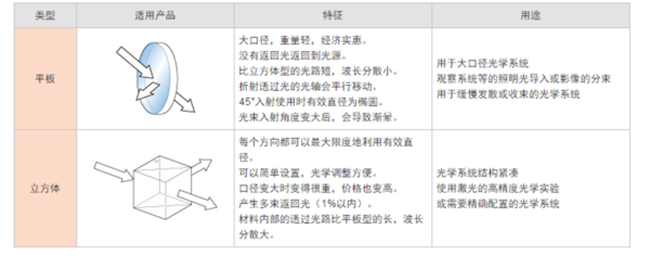
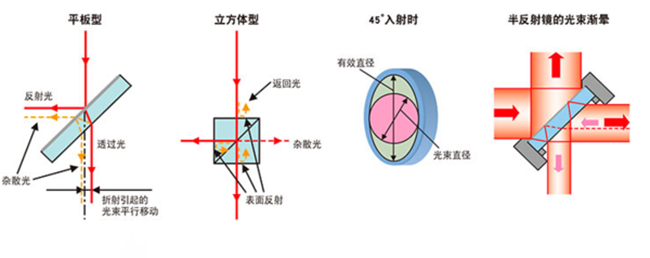
Regarding the amount of light for beam splitting:
A half mirror is designed based on a 1:1 ratio of reflected and transmitted light. Due to the different incident directions or polarization states of the incident light, the ratio of light is sometimes less than 1:1.
Reflection and transmission characteristics vary with the direction of incident light:
Products using chromium or composite films: When light is incident from the coated surface and in the opposite direction, the reflection characteristics change.
When light is emitted from both sides in an optical system like a Michelson interferometer, the amount of light in the two paths may differ.
When you can choose the direction of the event, please select the following direction.
A planar beam splitter emits light from the surface of the coating.
A cubic spectroscope that emits light from the direction marked as 0.
When the direction of the event changes, features such as product catalogs cannot be obtained.
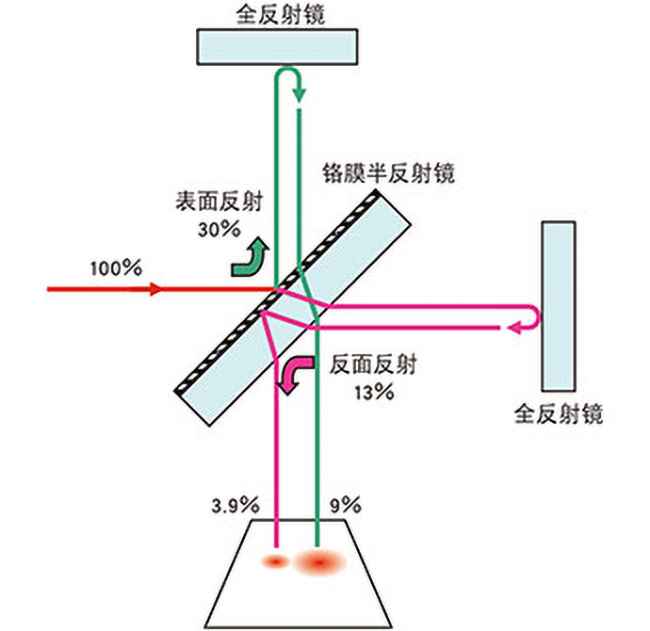
Comparison of Reflection Characteristics of Chromium Film Flat Half Lens (PSCH) under Different Events
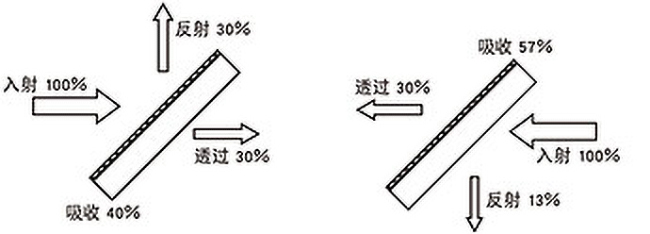
The changes in transmittance and reflectance caused by different incident directions vary with the type of half mirror.

Reflection and transmission characteristics of polarized light
When using lasers, the light emitted from the laser is polarized, so even in experiments or optical systems that are independent of polarization, the polarization characteristics of the beam splitter must be considered.
The amount of reflected light varies with the type and polarization direction of the spectroscope.
Under any laser polarizer condition, a non polarizer (NPCH) is required to select the same amount of light as the reflected light.
There are two types of spectrometers: cube and tablet
Regarding the amount of light for beam splitting:
A half mirror is designed based on a 1:1 ratio of reflected and transmitted light. Due to the different incident directions or polarization states of the incident light, the ratio of light is sometimes less than 1:1.
Reflection and transmission characteristics vary with the direction of incident light:
Products using chromium or composite films: When light is incident from the coated surface and in the opposite direction, the reflection characteristics change.
When light is emitted from both sides in an optical system like a Michelson interferometer, the amount of light in the two paths may differ.
When you can choose the direction of the event, please select the following direction.
A planar beam splitter emits light from the surface of the coating.
A cubic spectroscope that emits light from the direction marked as 0.
When the direction of the event changes, features such as product catalogs cannot be obtained.
Comparison of Reflection Characteristics of Chromium Film Flat Half Lens (PSCH) under Different Events
The changes in transmittance and reflectance caused by different incident directions vary with the type of half mirror.
Reflection and transmission characteristics of polarized light
When using lasers, the light emitted from the laser is polarized, so even in experiments or optical systems that are independent of polarization, the polarization characteristics of the beam splitter must be considered.
The amount of reflected light varies with the type and polarization direction of the spectroscope.
Under any laser polarizer condition, a non polarizer (NPCH) is required to select the same amount of light as the reflected light.