Filter transmittance
Filter, as an important optical component, plays a crucial role in optical systems. The transmittance of a filter refers to its ability to transmit light of a specific wavelength, usually expressed as a percentage. The transmittance of a filter not only affects the imaging quality of an optical system, but also directly relates to the performance and service life of optical components. Therefore, studying and optimizing the transmittance of optical filters is of great significance.
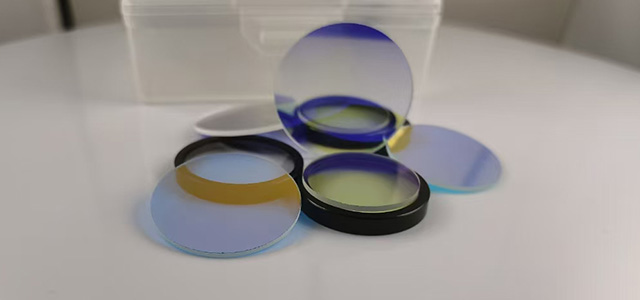
1、 Basic concept of filter transmittance
The transmittance of a filter refers to its ability to transmit light of a specific wavelength. Normally, filters have a higher transmittance for specific wavelengths of light and a higher absorption or reflection ability for other wavelengths of light. This characteristic enables the filter to selectively transmit light of specific wavelengths in optical systems, thereby achieving control and regulation of light.
2、 The influencing factors of filter transmittance
The transmittance of a filter is influenced by various factors, including material, structure, thickness, and surface treatment. Among them, material is one of the main factors affecting the transmittance of the filter. Different materials have different refractive indices and absorption characteristics, which affect the transmittance of the filter. In addition, the structure of the filter also affects its transmittance. For example, filters with multi-layer film structures typically have higher transmittance and lower reflectivity. The thickness of the filter also affects its transmittance. The thicker the thickness, the lower the transmittance usually. Finally, the surface treatment of the filter will also affect its transmittance. For example, surface coating can reduce reflection and scattering, thereby improving transmittance.
3、 Measurement method of filter transmittance
The measurement of filter transmittance is usually carried out using a spectrometer. The spectrometer can measure the transmittance of light of different wavelengths, thereby obtaining the transmittance curve of the filter. In addition, measurements can also be made using a transmittance tester. The transmittance tester can measure the transmittance of a filter to specific wavelengths of light, thereby obtaining the transmittance of the filter. It should be noted that during the measurement process, the light source should be stable and the environmental conditions should be consistent to ensure the accuracy of the measurement results.
4、 Optimization method for filter transmittance
In order to improve the transmittance of the filter, various optimization methods can be adopted. Firstly, selecting suitable materials is the key to improving transmittance. For example, choosing materials with high refractive index and low absorption properties can improve transmittance. Secondly, optimizing the structure of the filter is also an effective method to improve transmittance. For example, using a multi-layer film structure can effectively reduce reflectivity and improve transmittance. In addition, optimizing the thickness and surface treatment of the filter can also improve transmittance. Finally, the structural parameters of the filter can be optimized through computer simulation and optical design software to achieve higher transmittance.
5、 Application areas of filter transmittance
The transmittance of filter has a wide range of applications in multiple fields. In optical imaging systems, filters can be used to improve imaging quality, reduce noise and halo. In laser systems, filters can be used to selectively transmit light of specific wavelengths, thereby improving the output power and stability of the laser. In the biomedical field, filters can be used to selectively transmit light of specific wavelengths, enabling imaging and analysis of biological tissues. In addition, filters are widely used in fields such as spectral analysis, environmental monitoring, and communication.
VI. Conclusion
The transmittance of a filter is a key parameter that affects the performance of an optical system. By selecting appropriate materials, optimizing structures, and surface treatments, the transmittance of the filter can be effectively improved. Meanwhile, the transmittance of the filter can be accurately measured using measuring tools such as spectrometers and transmittance testers. With the continuous development of optical technology, the transmittance of optical filters will be further optimized, thereby promoting the performance improvement of optical systems and the expansion of application fields.