Color classification of optical coated filters
In daily life, we can see various colors of objects. There are also many colors for color filters, such as red, orange, yellow, green, blue, purple, etc. So what made the decisionfilterWhat about the color?
Let's first clarify the principle of light. What is the difference in the principle of light shining on transparent and opaque objects.
One The color of opaque objects is determined by the reflected color light.
The color of opaque objects (such as tables and walls) is determined by the color light they reflect, while opaque objects mainly reflect colored light of the same color as themselves.
For example, if a beam of white light is shone on a blue object, visible light other than blue in the white light will be absorbed by the blue object, and only blue cannot be absorbed or reflected back, so the color presented by the object is blue. However, if we shine red light on a blue object, because the red light is absorbed by the blue object, we cannot see the reflected light, so the blue object is black.
In addition, a white opaque object can reflect all colors of light, so no matter what color the light on the white transparent object is, we can see its color. Black opaque objects hardly reflect any color of light, so when any color of light reaches their surface, we will be black because we cannot see the reflected color light.
For example, the red filter RG630 is a type of colored glass that belongs to absorbing materials. Under normal sunlight, it appears red, but if illuminated with a 532 green laser, the reflected light appears black.
II The color of a transparent object is determined by the color light it passes through.
The color of transparent objects such as glass is determined by the color light they transmit, and transparent objects can penetrate the same color light as themselves.
For example, if white light passes through blue glass, other colors except blue light cannot pass through the glass smoothly, so the glass we see will appear blue. If a transparent object allows all colored light to pass through, then the transparent object will appear colorless.
For example, coating filter BP6507. It looks like silver. If you use red light to emit light, the red light will be transparent, so it will appear red; If you use green light to emit light, the green light will be transparent and appear green.
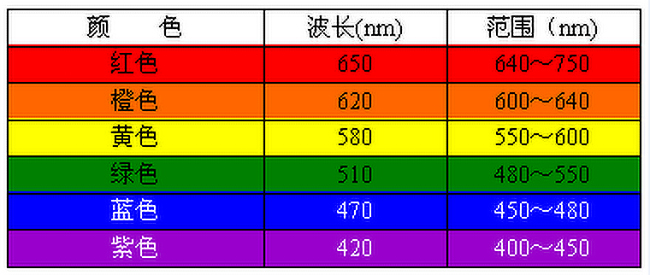
Ordinary coated filters are transparent, so their color depends on the wavelength band they choose to pass through. For example, a filter with a center wavelength of 400-450 nanometers is purple, a filter with a center wavelength of 450-480 nanometers is blue, and so on.
Let's first clarify the principle of light. What is the difference in the principle of light shining on transparent and opaque objects.
One The color of opaque objects is determined by the reflected color light.
The color of opaque objects (such as tables and walls) is determined by the color light they reflect, while opaque objects mainly reflect colored light of the same color as themselves.
For example, if a beam of white light is shone on a blue object, visible light other than blue in the white light will be absorbed by the blue object, and only blue cannot be absorbed or reflected back, so the color presented by the object is blue. However, if we shine red light on a blue object, because the red light is absorbed by the blue object, we cannot see the reflected light, so the blue object is black.
In addition, a white opaque object can reflect all colors of light, so no matter what color the light on the white transparent object is, we can see its color. Black opaque objects hardly reflect any color of light, so when any color of light reaches their surface, we will be black because we cannot see the reflected color light.
For example, the red filter RG630 is a type of colored glass that belongs to absorbing materials. Under normal sunlight, it appears red, but if illuminated with a 532 green laser, the reflected light appears black.
II The color of a transparent object is determined by the color light it passes through.
The color of transparent objects such as glass is determined by the color light they transmit, and transparent objects can penetrate the same color light as themselves.
For example, if white light passes through blue glass, other colors except blue light cannot pass through the glass smoothly, so the glass we see will appear blue. If a transparent object allows all colored light to pass through, then the transparent object will appear colorless.
For example, coating filter BP6507. It looks like silver. If you use red light to emit light, the red light will be transparent, so it will appear red; If you use green light to emit light, the green light will be transparent and appear green.
Ordinary coated filters are transparent, so their color depends on the wavelength band they choose to pass through. For example, a filter with a center wavelength of 400-450 nanometers is purple, a filter with a center wavelength of 450-480 nanometers is blue, and so on.