Product Detail
Mirrors
Related Products
- Ruicheng Optoelectronics Silver Plated Reflective Mirror
- Gold-plated reflective lens
- 980nm laser reflector
- 400-700nm visible light aluminum coated reflective mirror
Custom Order
 15112422758
Call / Send specs for a quote
Custom to Drawing or Sample
Send us wavelength, size and coating specs — or a drawing or sample — and we will evaluate and issue a proposal. Prototype samples in 3-7 working days.
Scan to chat with us
Technical Specifications
Specifications for this model are coming soon — call us for measured data.
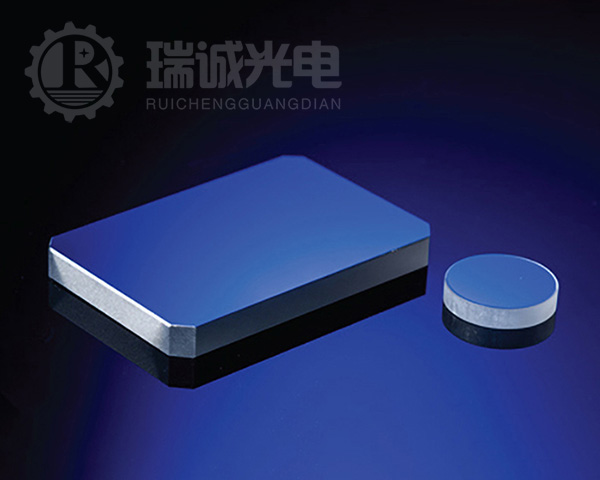
Front surface mirror, also known as reflective mirror, high reflection mirror, front reflection mirror, coated reflection mirror, visible light total reflection mirror, etc. It is an optical element that utilizes the law of reflection to deposit a layer of metallic silver or aluminum film on the back of an optical material, causing the incident light to reflect on the first surface. According to their shape, they can be divided into flat mirrors, spherical mirrors, and non spherical mirrors.
The front surface mirror can double the laser output power and is the first mirror reflection. The reflection image is undistorted and free of ghosting, which is the reflection function of the front surface. The images obtained with coated mirrors not only have high brightness, but also high accuracy and no deviation. The picture quality is clearer and the colors are more realistic. The front surface reflector lens itself is silver in color and is widely used in optical high fidelity scanning reflection imaging, rear projection reflection imaging, rear projection splicing units, optical laser reflection, etc.
spectral parameters
Reflection rate: HR-94 (with an average of over 94% at 400~700 wavelengths, a universal imaging standard)
Substrate material: Large float glass
Lens thickness: 0.5mm, 0.7mm, 1.1mm, 1.25mm, 1.9mm, 2.0mm, 3.0mm, 4.0mm, 5.0mm, 10mm. Customization can also be made according to customer requirements.
Application areas: Stage laser light equipment, laser barcode scanners, copiers, document scanners, laser printers, fax machines, multifunctional imaging equipment, digital cameras, optical analysis instruments, projectors, audio and video equipment, rear projection televisions, home theaters, video walls, square rear projection, large-scale venue rear projection, and business communication (PDA).
Environmental humidity test: The relative humidity of the product is 95%, the ambient temperature is 50 degrees, 24 hours, no film removal, no film cracks, and the optical reflectivity does not decrease.
Scratch resistance test: Place the product on a wear-resistant machine or apply a force of about 0.5 kilograms. Place a steel ball with a diameter of 12 millimeters coated with cotton yarn on the coating surface of the product and rub it back and forth 200 times without obvious scratches.
Film adhesion test: The surface of the product is attached to Schott's 3M single-sided adhesive, model 610. After complete adhesion, the adhesive is peeled off 45 degrees in the opposite direction, and there is no film on the adhesive.
Corrosion resistance test: Place the product in a salt spray test chamber containing 5% salt molecules, maintain the temperature at around 35 ℃, and after 24 hours, the product shows no difference.
All products must be tested in the above four methods before they can be shipped.