Take you to understand the eight biometric technologies in daily life
Biometric technology is a recognition technology that relies on the physical characteristics of the human body for identity verification. Due to its characteristics of not losing, not forgetting, uniqueness, immutability, good anti-counterfeiting performance, and convenient use, with the development of technology, our lives are increasingly inseparable. Biometric recognition technology is widely used in access control, attendance, finance, public safety, and terminal electronic devices.
1. Fingerprint recognition
The most widely used identification method currently is to analyze the global and local features of fingerprints, such as ridges, valleys, endpoints, forks or divergence points, and then confirm a person's identity through comparison.
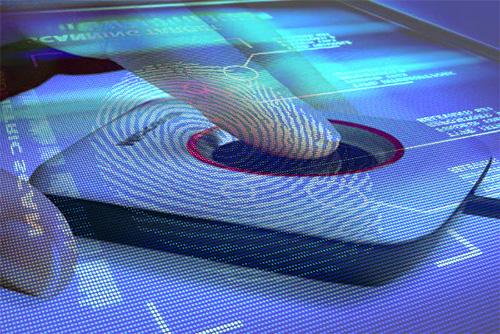
Meanwhile, capacitive technology is currently the most commonly used technique for collecting fingerprints. By pressing down on the ridges and valleys of the fingers on the collection head, the chip can obtain complete fingerprint information through testing due to the capacitance generated between the finger skin and the chip. All fingerprint recognition on mobile phones is capacitive fingerprint recognition.
2. Eyeline recognition
Confirm identity by identifying the vein texture in the white area of the eyes. This is because there are many small veins in the white part of the human eye, and the layout and texture of the blood vessels are unique and stable, which cannot be replicated and is a good biometric basis. Because eye prints cannot be replicated, their anti-counterfeiting ability is higher than fingerprint recognition, but they are affected by factors such as ambient light, so their anti-interference ability is not as good as fingerprints.
3. Iris recognition
3. Iris recognition
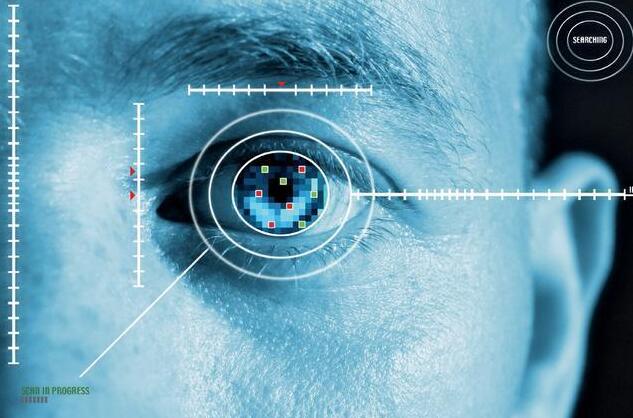
Each iris contains unique features such as corona, crystalline lens, filaments, spots, pits, wrinkles, and stripes. Iris recognition technology utilizes the lifelong invariance and diversity of the iris to identify identity. In theory, the lifetime of the iris remains unchanged, and the false recognition rate of iris recognition is 1/150000, which is higher than the 1/50000 of fingerprint recognition, making it more suitable as a“ Password”. But fingerprint recognition is more convenient than iris recognition, because the closest part of a phone is the hand, not the eyes.
4. Retinal recognition
In fact, the most suitable password should be the retina, which is an extremely fixed biological feature that is not worn, aged, affected by diseases, invisible, and cannot be forged. However, the implementation of retinal recognition is destined to be unacceptable to consumers. Because retinal recognition requires laser irradiation on the back of the eye to obtain the uniqueness of retinal features, and laser irradiation may affect the health of the user.
5. Voiceprint recognition
Voiceprint recognition is a behavior recognition technology that matches the waveform and changes of collected sounds with registered sound templates through testing. This is a non-contact recognition method that is very natural to implement. However, the range of sound variation is very large, and changes in volume, speed, and sound quality can all affect the results of collection and comparison. Simultaneously, by recording or synthesizing, it is easy to fabricate sounds.
6. Facial recognition
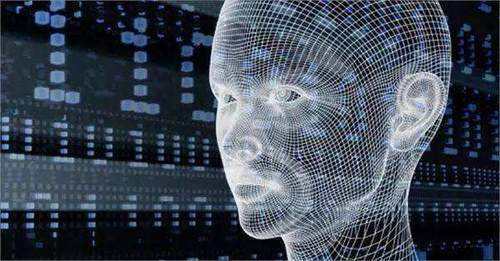
Simply put, facial recognition quantifies a series of parameters based on the distance, angle, size, and appearance between facial features and facial organs for recognition. Facial recognition involves multiple organs and covers a large area, making its recognition very complex. At the same time, it is also affected by many interfering factors, such as human expressions, posture, etc. Of course, the accuracy of facial recognition can also be very high, but its cost is higher. The facial recognition solution in mobile phones should be a low-cost and minimalist solution.
Biometric technology is developing rapidly, and in the future, more and more will be realized and matured by technology. But currently, fingerprint recognition is still the safest, most stable, and convenient solution on mobile phones. Shenzhen Ruicheng Optoelectronic Technology Co., Ltd. produces various optical lenses such as optical filters, optical coatings, infrared cut-off filters, narrowband filters, bandpass filters, long wave pass filters, short wave pass filters, spectrometers, dichroic mirrors, attenuators, polarizers, magnifying lenses, infrared sub micron filters, window lenses, etc. Its main application areas include optical instrument equipment, light detection equipment, medical devices, beauty equipment, facial recognition, iris recognition, fingerprint recognition, infrared sensing system, vehicle sensing system, security cameras, mobile phone cameras, photography equipment, micro projector equipment, stage lights, lawn lights, inductive smoke detection equipment, multi band detection equipment, four-wheel alignment device, laser welding equipment, laser marking equipment, laser cutting equipment, etc. If you have any technical problems, please consult customer service or technical personnel.