Neutral Density Filter
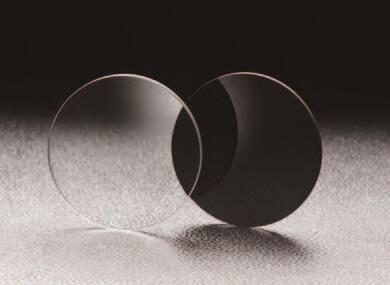
In the field of photography or optics, neutral optical filters, also known as ND filters, are a type of filter that can reduce or alter light
A filter with all wavelengths or colors that do not change the color tone. It can be a colorless filter or a gray filter.
The purpose of standard photography neutral filters is to allow photographers to flexibly change the aperture, exposure time, and dynamic blur of the target object in different environments and shooting conditions.
Principle
Principle
Neutral density filter, optical density d, all optical power is transmitted through the filter, and the logarithmic ratio it can calculate measures the intensity (I) and incident intensity (I0). The formula is as follows:
Transmittance (I⁄ I0)=10-d, or d=- log10
For example, on a sunny day, if a photographer wants to capture a waterfall with a low-speed shutter to create a dynamic blur effect, they only need to press the shutter button at a speed of one second. There is so much light that even at the minimum shutter speed and aperture, such as f/32, the ideal shutter speed is still too bright and the photo will be overexposed; Alternatively, if the aperture is adjusted beforehand and the camera selects the shutter speed, the desired effect can be quickly achieved. In this case, considering the desired motion effect with a slower shutter speed, applying a suitable neutral density filter is equivalent to reducing one or more additional terminations. The use of neutral filters allows photographers to utilize larger apertures at or above the diffraction limit, varying with the size of the sensory medium (film or digital). For most cameras with smaller sensory media models, it is between f/8 and f/11, requiring larger apertures that can also be used in smaller apertures. Neutral filters can also reduce the depth of field in images when it is not possible to limit the maximum shutter speed (by using an aperture). However, photographers will add a neutral filter to limit the light and can set the shutter speed based on specific motion requirements (such as dynamic water scenes) and the required aperture size (small aperture for maximum clarity or large aperture for narrow depth of field shots (subject is focus, background is not focus)). Using a digital camera, photographers can immediately see the image and can also choose the best neutral filter to use in the first captured scene to achieve the desired maximum clarity. When the ideal moving object is found, the shutter speed will be selected. For these cameras, they will be set to manual mode, adjusting the overall exposure based on factors such as aperture size, shutter speed, and the required number of stops to achieve the desired level of exposure. In this application, the neutral filter will cancel out the required number of terminations. The example of this application is as follows: blurry water dynamics (such as waterfalls, rivers, oceans). Reduce the depth of field of view under strong light (such as during the day). When using a flash with a focal plane shutter camera, the exposure time is limited to the maximum speed; Usually one two fifths of a second, this is when the entire film or sensor is immediately exposed to sunlight. No neutral filter is required to use f8 or higher to obtain the desired results.
Stay below the diffraction limit with a wider aperture.
Reduce the visibility of moving objects.
Expand the length of exposure time.
Neutral filters are used to control the aperture of photographic lenses, as using a traditional pupil membrane can increase central obstruction and result in poor performance.
Neutral filters are used in various high-precision laser experiments because the power of the laser cannot be adjusted without adjusting its characteristics (such as beam alignment). In addition, most lasers set a minimum power during operation. To achieve ideal light attenuation, one or more neutral filters are placed in the path of the beam. Large telescopes can make the moon, river, and stars brighter while reducing contrast. A neutral filter can increase contrast and decrease brightness, making the moon easier to observe.
variety
An upgraded neutral filter is similar except for the intensity of light passing through the surface of the filter. When the image of an area is vivid and the rest is dark, it is beneficial, just like a photo taken at sunset. Transition areas or edges have different variations (soft, hard, attenuator). The most common is the soft edge, which provides a smooth transition from the neutral filter side to the clear side. The hard edge gradient has a strong transition from neutral to clear, and the attenuator
The advantages gradually changed for most filters, so the transition was not so obvious. Another type of neutral filter configuration is the adjustment wheel of the neutral filter. It consists of two densely coated porous glass disks. When two disks rotate relative to each other, they gradually change from a penetration rate of 100% to 0%. The above mentioned are used in the refraction of telescopes and in any aperture that requires 100% transmittance (usually the system that needs to work will have the highest angular resolution). The practical application of neutral filters is not ideal because they do not reduce the intensity of all wavelengths. Sometimes he will cast colors on stored images, especially cheap filters. More meaningfully, most day filters only target the visible region of the spectrum and do not block all waves of ultraviolet or infrared radiation. If a neutral filter is used to view the original signal, it may be dangerous (such as from the sun or white hot metals or glass), as they emit strong invisible radiation because even if the light source does not appear so strong, it can cause harm to the eyes when observed through the filter. Special filters must be used while ensuring source safety.
Types of ND filters
In the photography industry, ND filters are quantified by their optical density or aperture range. In microscopy, the value of transparency is reflected. The lens area is open as part of the complete lens
Reduction of optical density f-stop transmittance%
ND2 1/2 0.3 1 50%
ND4 1/4 0.6 2 25%
ND8 1/8 0.9 3 12.5%
ND16 1/16 1.2 4 6.25%
ND32 1/32 1.5 5 3.125%
ND64 1/64 1.8 6 1.563%
ND128 1/128 2.1 7 0.781%
ND256 1/256 2.4 8 0.391%
ND512 1/512 2.7 9 0.195%
ND1024 1/1024 3.0 10 0.098%
ND4096 1/4096 3.6 12 0.024%
ND8192 1/8192 3.9 13 0.012%