Product Detail
Lenses, Prisms & Focus Lenses
Related Products
Custom Order
 15112422758
Call / Send specs for a quote
15112422758
Call / Send specs for a quote
Custom to Drawing or Sample
Send us wavelength, size and coating specs — or a drawing or sample — and we will evaluate and issue a proposal. Prototype samples in 3-7 working days.
Scan to chat with us
Technical Specifications
Specifications for this model are coming soon — call us for measured data.
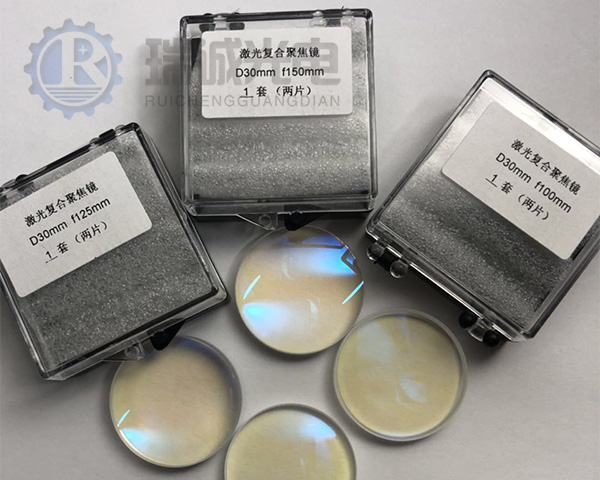
Laser focusing mirrors play an important role in laser systems and are the core optical components of laser engraving and cutting machines. The change of laser optical path is achieved through the refraction of lenses. The function of focusing mirrors is to focus and adjust the laser focus, focusing the laser beam emitted on a small point, thereby producing a high-energy density focal point for processing the working substance. Focusing mirrors bear most of the energy of the laser beam, so qualified focusing mirrors need to have high temperature resistance performance, which also greatly affects their service life. At the same time, its surface should be very smooth. If its surface is uneven, it will cause the laser beam to diverge and change the direction of some light rays. This not only reduces power energy, but also causes damage to the lens itself. The transmittance of composite focusing lenses is also an important parameter, the higher the transmittance, the better the lens, and correspondingly more durable. The quality of a laser lens largely depends on the quality of the collimating lens and focusing lens, so it is particularly worth paying attention to when purchasing.
Focusing mirrors are divided into single piece focusing mirrors and composite focusing mirrors. In order to minimize spherical aberration as much as possible, Ruicheng Optoelectronics recommends that customers choose dual piece combination focusing mirrors as much as possible.
Lens parameters
Material JGS1: Imported fused quartz
Appearance tolerance:+0.0/0.1mm can be customized
Thickness tolerance:+-0.1mm
Surface finish: 20-10
Parallelism: ≤ 0.5
Effective aperture:>90
Inverted edge:<0.2X45°
Coating: broadband anti reflection film, anti laser film
Diameter tolerance: -0.10mm
Center thickness tolerance:+-0.1mm
Focal length tolerance:+-1%
Aperture: 1-5
Local aperture: 0.2-0.5
Features: Ultra low absorption, able to withstand 20000W laser power, high damage resistance threshold, long lifespan.
Applications: laser cutting, laser welding, laser quenching, laser cladding.
Laser cutting machine focusing lens selection technique: The smaller the focusing lens size, the finer the diameter of the output spot, and the more concentrated the laser energy and power, but the materials that can be processed are thinner. Compared to lenses with short focal lengths, lenses with long focal lengths have larger and deeper focal points, and the appropriate focal length should be selected based on actual needs.
The laser composite focusing mirror produced by Ruicheng Optoelectronics strictly controls the quality from substrate to coating, using imported quartz crystal material with excellent optical, thermal, and mechanical properties. It is coated with a high damage threshold anti reflection film on both sides to reduce losses caused by reflection. All mirror pieces are made of excellent substrates processed through slicing, polishing, grinding, and other processes, with strong laser resistance and a transmittance of over 99.5%, ensuring the highest quality products provided to customers. Laser composite focusing mirrors are widely used in laser cutting, laser welding, laser quenching, and laser cladding.
Lens parameters
Material JGS1: Imported fused quartz
Appearance tolerance:+0.0/0.1mm can be customized
Thickness tolerance:+-0.1mm
Surface finish: 20-10
Parallelism: ≤ 0.5
Effective aperture:>90
Inverted edge:<0.2X45°
Coating: broadband anti reflection film, anti laser film
Diameter tolerance: -0.10mm
Center thickness tolerance:+-0.1mm
Focal length tolerance:+-1%
Aperture: 1-5
Local aperture: 0.2-0.5
Features: Ultra low absorption, able to withstand 20000W laser power, high damage resistance threshold, long lifespan.
Applications: laser cutting, laser welding, laser quenching, laser cladding.
Laser cutting machine focusing lens selection technique: The smaller the focusing lens size, the finer the diameter of the output spot, and the more concentrated the laser energy and power, but the materials that can be processed are thinner. Compared to lenses with short focal lengths, lenses with long focal lengths have larger and deeper focal points, and the appropriate focal length should be selected based on actual needs.
The laser composite focusing mirror produced by Ruicheng Optoelectronics strictly controls the quality from substrate to coating, using imported quartz crystal material with excellent optical, thermal, and mechanical properties. It is coated with a high damage threshold anti reflection film on both sides to reduce losses caused by reflection. All mirror pieces are made of excellent substrates processed through slicing, polishing, grinding, and other processes, with strong laser resistance and a transmittance of over 99.5%, ensuring the highest quality products provided to customers. Laser composite focusing mirrors are widely used in laser cutting, laser welding, laser quenching, and laser cladding.